

The renewed US intervention in Venezuela is not just a foreign policy headline; it is a resource play with potential consequences that ripple directly into energy markets, industrial policy and the future balance between primary aluminium and recycling in the United States. Venezuela holds the largest proven oil reserves on the planet and any scenario in which the US regains strategic influence over that supply immediately raises a tempting question for our industry: Does access to massive oil reserves finally unlock a pathway to reindustrialise US primary aluminium?
The short answer is no. The longer answer is more interesting and far more relevant to where capital, technology and strategy should flow in 2026.
Why oil access will not revive the US primary aluminium industry
Aluminium is not an oil industry. It is an electricity industry. Every serious conversation about primary aluminium competitiveness eventually collapses into one variable: stable, long-term, low-cost power. Oil can influence macro energy markets, government revenues and geopolitical leverage, but it does not automatically translate into cheap electrons flowing into smelters. Even if Venezuelan oil were monetised efficiently, which itself is a multi-year challenge given infrastructure decay, heavy crude characteristics and geopolitical risk, the path from barrels of oil to competitively priced industrial electricity is indirect, slow and politically fragile.
Yet the question persists because policymakers often confuse energy abundance with industrial competitiveness. The temptation is obvious: if the US can secure access to vast oil reserves, could that revenue or leverage be used to subsidise domestic primary aluminium, restart idled smelters and reduce dependence on imports? In theory, yes. In practice, the aluminium industry knows better. Smelters are not restarted with rhetoric or short-term subsidies. They require decades-long confidence in energy pricing, regulatory stability, labour availability and environmental permitting. None of those variables is solved by oil access alone.
What China and Russia got right about energy and aluminium
This is where the comparison with China becomes unavoidable. China does not dominate aluminium because it has oil. It dominates because it aligned energy policy, infrastructure investment and industrial execution for decades. Its aluminium industry is built on scale, grid integration and state-backed coordination between power generation and metal production. Russia, despite sanctions and geopolitical isolation, still benefits from vertically integrated structures and energy-linked metal production. Against that backdrop, Venezuela does not suddenly make the US competitive in primary aluminium. It merely adds another geopolitical lever to an already complex equation.
The real opportunity is downstream, not in smelting
Where the Venezuelan angle becomes more interesting is not in primary smelting, but in how it could indirectly reshape the broader industrial ecosystem that consumes aluminium. If US access to oil and potentially to mineral resources such as rare earths translates into greater energy security, stronger fiscal capacity and accelerated investment in strategic industries like semiconductors, AI, data centres and electrification, aluminium demand will follow. But not all aluminium is created equal.
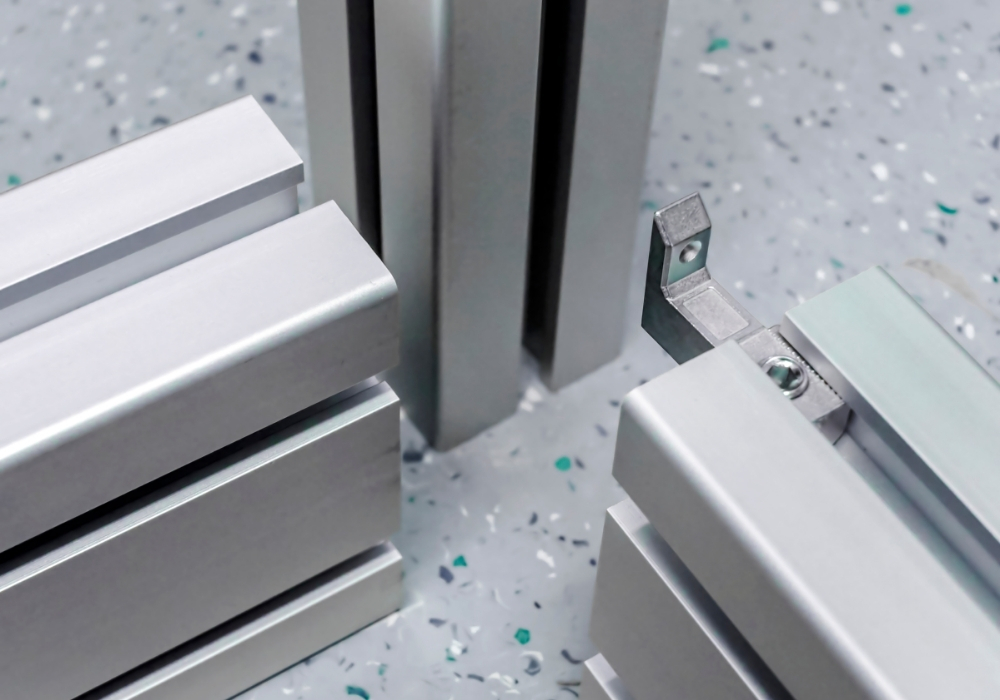
Image used for representational purpose
The aluminium demanded by data centres, EV infrastructure, advanced manufacturing and AI-driven hardware is not simply raw primary metal. It is a high-quality, low-carbon, tightly controlled material which is often recycled, often alloy-specific and often requires advanced melt treatment, filtration and casting technologies. This is where the narrative shifts decisively away from a “primary revival” fantasy and back toward the uncomfortable reality: recycling remains the fastest, cheapest and most energy-efficient way for the US. to strengthen its aluminium position.
Recycling, not primary expansion, is the US advantage
Recycling does not make headlines like geopolitical interventions do, but it wins on physics. Secondary aluminium requires roughly five per cent of the energy needed for primary production. It can be deployed quickly, scaled modularly and optimised continuously through better scrap preparation, decoating, yield control and automation. In a world where energy volatility is the norm and geopolitical risk is persistent, recycling reduces exposure rather than amplifying it.
This is why any serious 2026 strategy must separate political symbolism from industrial logic. Even if the US were to subsidise primary aluminium using energy-linked mechanisms enabled by broader geopolitical moves, those subsidies would face immediate scrutiny from trade partners, environmental regulators and the market itself. Meanwhile, every dollar invested in improving recycling efficiency delivers faster returns, lower emissions and greater resilience. The math is brutal and clear.
The rare earth discussion adds another layer of intrigue, but again, the implications for aluminium are indirect. If US access to Venezuelan mineral resources accelerates domestic chip manufacturing, AI infrastructure and advanced electronics, aluminium demand will rise, but primarily in downstream products: extrusions, rolled products, thermal management systems and structural components. These segments thrive not on raw primary tonnage, but on quality, consistency and low-carbon credentials. Recycling feeds that demand far more efficiently than restarting legacy smelters.
From cost optimisation to risk control
So, does this mean primary aluminium has no future in the US? Not exactly. It means primary aluminium will become more selective, more strategic and more politically managed. We may see targeted investments where energy is abundant and clean hydro, nuclear, or long-term renewable PPAs. We may see government-backed projects framed as national security assets rather than purely commercial ventures. But this will not resemble the broad-based smelting footprint of the past. It will be narrow, deliberate and slow.

Image used for representational purpose
The real shift, accelerated by geopolitical turbulence, is psychological. The industry is being forced to confront a truth it has long avoided: Competitiveness is no longer about chasing the lowest global cost at any price; it is about controlling risk. Recycling controls risk. Automation controls risk. Scrap quality controls risk. Energy efficiency controls risk. Primary aluminium, by contrast, concentrates risk, like energy risk, political risk and capital risk, into massive, inflexible assets.
In that sense, Venezuela does not change the aluminium equation by making energy cheap. It changes it by reminding the industry how fragile global supply chains are and how quickly access, alliances and assumptions can shift. The lesson for 2026 is not that the US should bet big on primary aluminium. The lesson is that the US should double down on what it can execute faster and better than anyone else: Intelligent recycling, advanced processing and integration between metal production and high-tech manufacturing.
The aluminium industry does not need another geopolitical gamble. It needs discipline. It needs realism. And it needs to stop confusing resource access with industrial advantage.
As 2026 unfolds, the winners will not be those waiting for cheap energy to arrive from somewhere else. They will be the ones who designed their operations to survive energy volatility, geopolitical shocks and regulatory pressure because they already assumed those forces were permanent.
In aluminium, as always, physics wins. And physics is still firmly on the side of recycling.