





Sounds like good advice, yet that is what is occurring with aluminium in the electrical marketplace. A copper industry standard is being used to define aluminium. It is like someone promoting themself by saying that their competitor came in next to last in a 2-man race.

Figure1. Two-man race
Absurd, yes, yet people are literally buying it! Here is why: The International Annealed Copper Standard (IACS) defines the electrical conductivity of copper as 100%. This has fostered the belief that copper is a better electrical conductor material than aluminium, when the exact opposite is true.

Figure 2. Definition is important
Aluminium has 200% of the weight conductivity of copper. IACS is based on volume conductivity. What is the difference between volume and weight conductivity?
Weight conductivity factors in density, volume conductivity does not. Aluminium is about 1/3 of the density of copper, so when conductivities are adjusted for weight, aluminium has twice, 200%, the conductivity of copper!
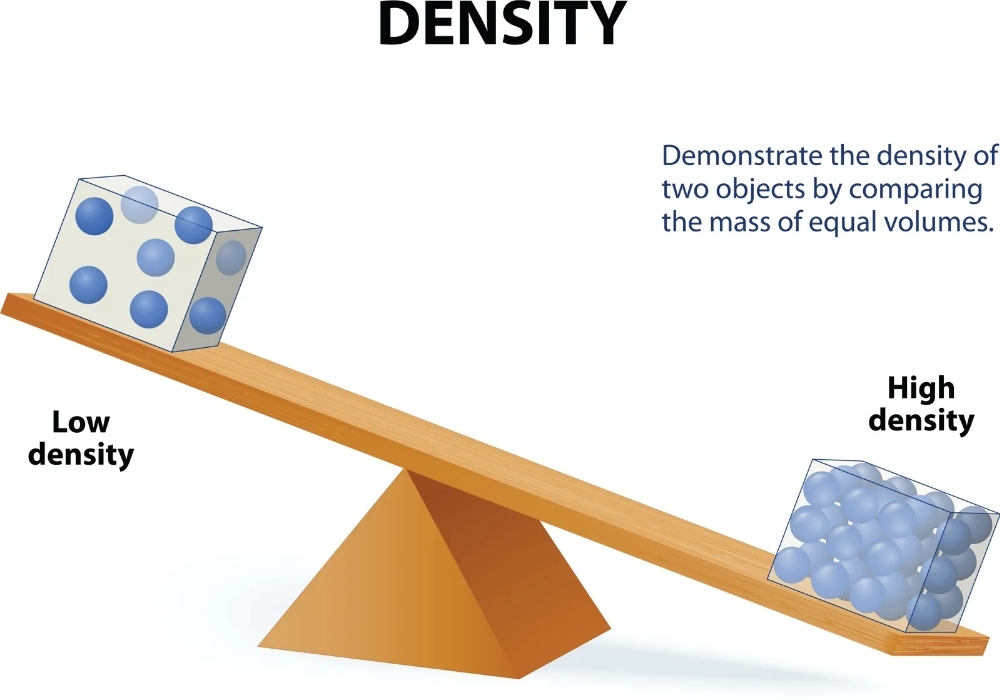
Figure 3. Equal volumes with differing densities
How can such an oversight happen? The answer is in the history of IACS, branding and the tendency to not recognise change that has occurred over a long period of time.
IACS was created in 1914 by copper wire manufacturers to standardise the purity of copper because the resistance of wires made by different copper companies varied.
According to Wikipedia, the International Annealed Copper Standard (IACS) is a standard established in 1914 by the United States Department of Commerce.[1] It is an empirically derived standard value for the electrical conductivity of commercially available copper. Sometime around 1913, several copper samples from 14 important refiners and wire manufacturers were analysed by the U.S. Bureau of Standards.
The 100% IACS rating for copper is just a benchmark, a nominal value selected to reduce copper variability. It is not the ultimate in conductivity. It does not consider weight because the weight of copper is constant. IACS is a COPPER PRODUCT STANDARD that was never intended to be used for other metals!
By 1944, when aluminium first became available for use as a base metal, copper had enjoyed a 60-year monopoly and was branded as the “Metal of Electrification”. This resulted in copper being the basis of all electrical codes and standards. The National Electrical Code, for example, originally just listed wire sizes with the understanding that they were copper.
The “Copper, Metal of Electrification” brand has become synonymous with electricity, much like ”Band-Aid” has become synonymous with adhesive bandages and “Kleenex” with facial tissue.
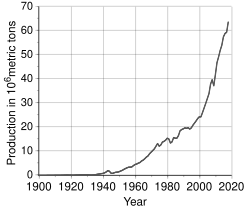
Figure 4. World Production of aluminium since 1900
It was only after WWII that aluminium became available for electrical wire and by then IACS was just routinely used without regard to its original intent. The purpose of the standard which was the reduction of copper variability, had long been forgotten.
If a weight-based aluminium conductivity standard were created with the conductivity of pure aluminium set as a 100% benchmark, copper would have a conductivity of only 50%! The following summarises the two methods of assessing conductivity:
| Conductivity | Weight | Volume |
| Aluminium | 100% | 61% |
| Copper | 50% | 100% |
Figure 5. Weight and Volume Conductivity Ratings
This illustrates why you should never let your competition define your product. The use of IACS to rate aluminium conductivity without factoring in weight is at the heart of the misconception that copper is a better conductor. It is not.
Furthermore, because IACS ignores density, the conductivity per dollar is not apparent and the value proposition of the two competing metals is hidden. Aluminium’s conductivity per dollar is 8 times, 800%, that of copper (2 times the price ratio of copper/aluminium, 4/1).
It will be interesting to see how long it takes artificial intelligence to conclude that when all relevant factors are considered, particularly weight and cost, aluminium is a much better conductor than copper. As Nikola Tesla foresaw (FN) in 1900, before IACS was promulgated in 1914, copper couldn’t compete with aluminium for electrification.
FN: Tesla’s View on Uses of Aluminium, Telluride Daily Journal, November 5th, 1900
————————————————————————————————–
Author: Peter Pollak, PE
Retired from The Aluminum Association after 35 years in charge of Electrical Services and Product Standards.
Column name: Discovering the New 21st Century “Metal of Electrification”









The distinction you make betweenBlog comment creation volume conductivity and weight conductivity is a really important one, especially since most people only ever hear the IACS number and assume it tells the full story. It’s interesting how shifting the frame to weight conductivity completely changes the perception of aluminium’s performance. This kind of clarification could really help more engineers rethink material choices based on actual application needs rather than long-standing assumptions.