

If you look back at the conversations we’ve had across 2025, one pattern keeps resurfacing: the US aluminium industry has been speaking the language of momentum while operating with the posture of hesitation. We’ve talked about uncertainty so many times that it has almost become background noise, until you realise uncertainty is no longer “a phase.” It’s starting to behave like a permanent market condition, shaping decisions in the same way energy costs or scrap spreads do.
That’s why the most interesting development this year hasn’t been a single technology announcement or a single price move. It’s been the investment paradox.
The investment paradox: Foreign capital moves while local capital waits
The United States is widely perceived as the most strategic place to build secondary aluminium capacity, close to OEM demand, close to reshoring narratives, and close to a customer base that is asking for traceability and lower-carbon supply. Yet, a meaningful portion of local capital still awaits “clarity.” Meanwhile, foreign groups and foreign-backed initiatives seem more willing to move.
Not always because they are braver, but because they interpret the same uncertainty differently: as a reason to establish a foothold, hedge trade risk and lock in commercial relationships before the next policy shift.
Why are furnaces not the bottleneck for scrap is
That difference in behaviour becomes easier to explain when you consider what many of these overseas players already have. They often bring deep know-how in melting and casting, discipline around operations and a willingness to replicate proven playbooks.
What they don’t have is the hardest part of the US secondary story: The local ecosystem that is scrap sourcing, commercial networks and the reality of how material moves, who controls it and what it costs when the market tightens.
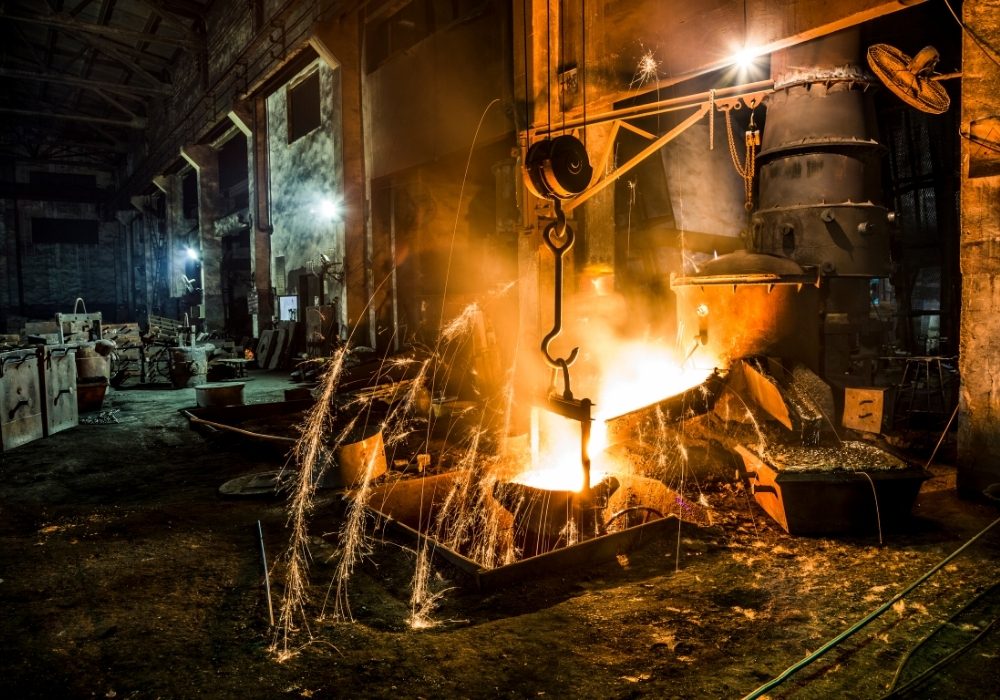
Image used for representational purpose
In other words, the furnace is not the bottleneck. The bottleneck is access to consistent, bankable feedstock and a commercial model that survives volatility.
This is why so many serious “new cast house” conversations in the US are quietly drifting toward partnership structures instead of pure greenfield bravado: One side knows how to convert metal; the other side knows how to secure the metal in the first place.
2026 decision-making is becoming political, not cyclical
When we talk about 2026, we have to start from the fact that the variables driving decision-making are becoming more political, not less. Tariffs, trade headlines and “rumours” have effectively become pricing inputs.
The direction of the Canada conversation is a good example: reporting has highlighted how sector-specific tariff relief has faced setbacks and how these topics may end up folded into broader negotiations and the USMCA review dynamic rather than being “cleanly resolved” in a way industry would prefer.
For aluminium leaders, the point isn’t to predict the exact wording of a policy outcome; it’s to accept that tariff risk is getting institutionalised as an operating reality.
That shifts behaviour: more re-opener clauses, more premium pass-through debates, more pressure for domestic sourcing and more strategic inventory decisions that can swing the market faster than fundamentals.
Pricing anchors and the danger of false stability
On pricing, many people are anchoring around the idea that 2026 could be supported by tighter balances and that something like USD 2,900 per tonne is a reasonable planning reference. Forecasts from major banks have discussed deficit-driven support and average price assumptions in that neighbourhood.
The danger in anchors is not that they’re wrong, but that they can create complacency. Even if LME is relatively “stable,” the real pain or opportunity often lives in regional premiums, scrap spreads and basis movements that respond to policy and flow changes faster than supply can adjust.
The industry doesn’t experience volatility as an academic chart; it experiences volatility as margin compression, sudden shortages of specific scrap grades, and commercial friction when contracts weren’t written to flex.
Canada trade risk and cross-border exposure
Canada matters here because it’s not just a neighbour; it’s a critical supply relationship in North American aluminium.
If the market enters 2026 with ongoing trade noise rather than a clean resolution, companies that depend heavily on cross-border flows will keep building hedges: dual sourcing, more aggressive domestic scrap capture, different inventory buffers and contracting language that forces difficult conversations upfront instead of during the crisis.
You can feel this in project discussions: many teams don’t even argue anymore about whether tariffs might matter; they argue about how to survive if they do.
China’s indirect impact on US aluminium economics
China remains another layer, even when you’re not buying directly from China. China shapes global aluminium economics through capacity decisions, demand swings and how trade restrictions redirect flows across regions.
The US-based research has discussed how tariff regimes can cause trade diversion and rerouting, which is often how “far away” policy ends up hitting local pricing indirectly.
For 2026, the China factor is frequently less about a straight import line and more about second-order effects: where metal ends up, where scrap ends up, what premiums do when one region tries to wall itself off and how quickly supply chains rewrite themselves to keep business moving.
Scrap retention becomes a strategic battlefield
Then there’s the quiet battleground: scrap policy and scrap retention. Throughout this year, the industry has increasingly treated scrap not as a commodity that will always be available, but as a strategic resource that can be constrained, redirected, or politicised.
The Aluminum Association has repeatedly emphasised the central role of recycling in the US supply and the importance of domestic scrap to the industry’s health and security.
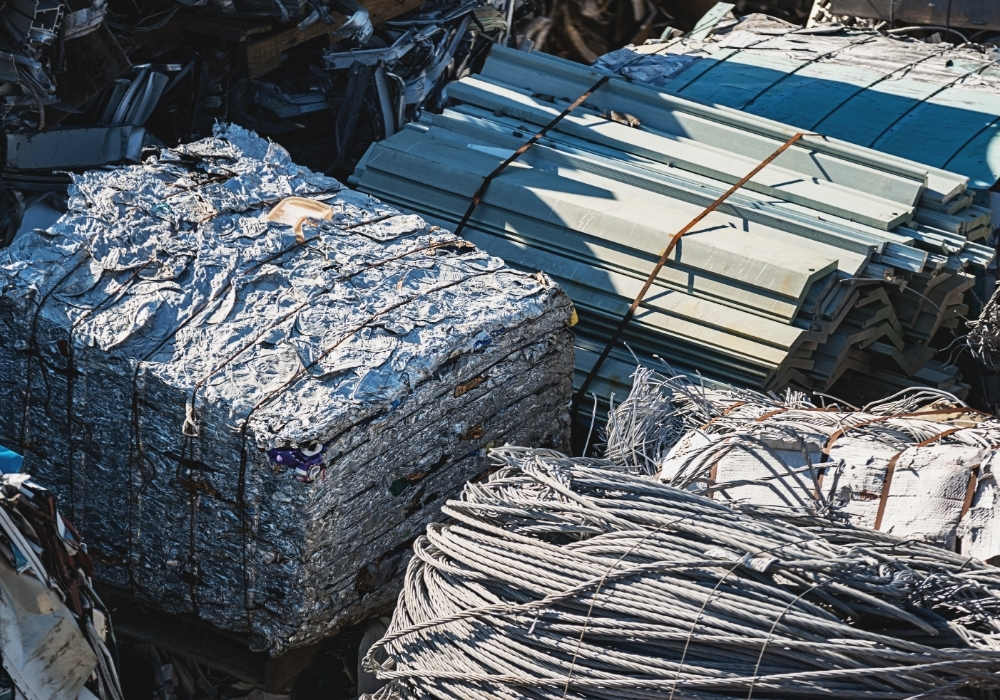
Image used for representational purpose
Whether or not policy changes materialise quickly, the trend is enough to influence behaviour: investors place a higher value on projects with secured scrap, OEMs lean harder into closed-loop structures and operators become more selective about the quality and traceability of what they buy because the cost of inconsistency is no longer hidden.
Why scenario readiness matters more than forecasts in 2026
So, what can we reasonably expect from 2026 in an economy that refuses to be predictable? The most honest answer is that “prediction” is the wrong tool. Strategy in 2026 is going to reward scenario readiness more than forecast confidence.
If you assume a baseline where volatility is managed rather than eliminated, you get a world where projects move, but selectively. Scrap processing, decoating and regional secondary capacity that strengthens supply reliability will continue to attract capital, because those investments are less about gambling on price and more about controlling yield, emissions profile and material consistency.
This is also where the foreign-versus-local paradox may persist: foreign groups, especially those with proven operational playbooks, may keep pushing forward as long as they can secure partnerships or channels that reduce sourcing uncertainty.
What happens if the market breaks either way
But if a tariff shock or a sudden trade pivot hits, the market’s reaction will likely be immediate: premiums swing, flows pause, inventory behaviour changes and weakly structured projects stall.
In that environment, M&A and partnership deals can actually accelerate, not slow down, because buying or partnering becomes faster than building while the world is changing under your feet.
On the other hand, if demand surprises to the upside: autos, packaging, construction, or a broader industrial rebound and then speed becomes the real differentiator: the winners are the teams who are already engineered, already permitted, already financed, and already secured on feedstock, because the market rarely gives you enough time to “start getting ready” after the signal arrives.
Also read: The tariff paradox: Reindustrialising America from the outside in
The real takeaway uncertainty is now the climate
If there is a single practical takeaway to close the year with, it’s this: in 2026, the most strategic aluminium businesses will stop treating uncertainty as a temporary storm and start treating it as climate.
That changes everything. It changes how you write contracts. It changes how you value projects (yield and feedstock security become bigger than theoretical melting rate). It changes what “technology leadership” means (less about shiny equipment, more about stable operations and controlled losses). And it changes who moves first.
The industry has spent years saying it wants clarity. 2026 will reward the companies that learn to move without it, without being reckless and by building resilience into the ecosystem: secured scrap, disciplined processing, flexible commercial structures and partnerships that close the real gaps.
In the end, the paradox isn’t that foreigners are moving and locals aren’t. The paradox is that the market is offering a premium to those who can operate through uncertainty, and many still behave as if uncertainty disqualifies the opportunity.
If 2025 was the year we described the problem out loud, then 2026 is the year the industry will be forced to choose: either build models that survive volatility, or remain spectators while others build the supply chains that will define the next decade.