




Introduction
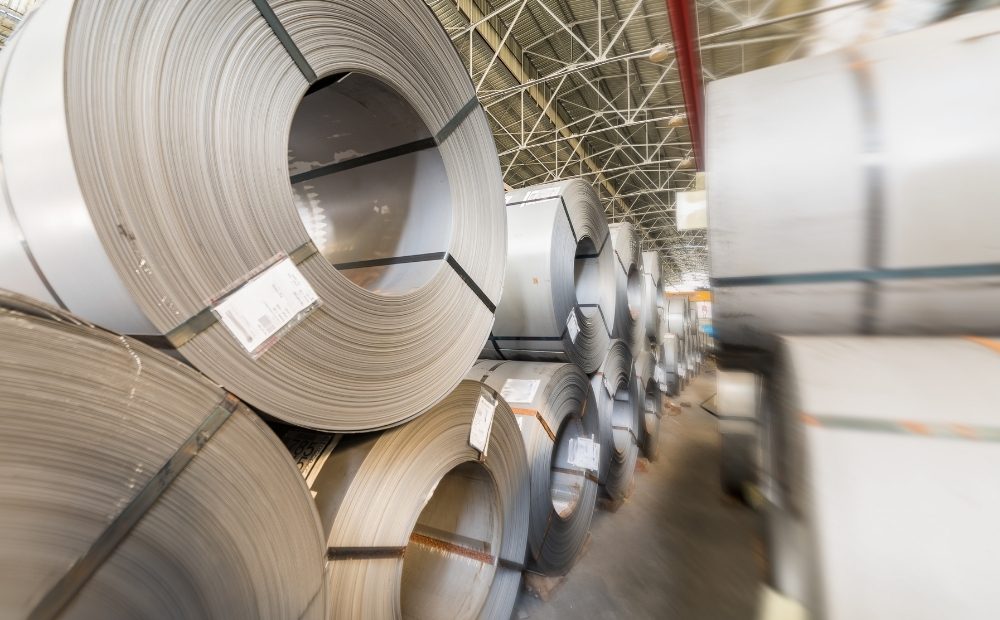
Aluminium foil is extensively used in the packaging industry due to the outstanding properties of the metal. Its primary role is to serve as a barrier against oxygen, light, moisture and microorganisms, thereby protecting food and pharmaceuticals from degradation.
The explosion of thin aluminium foil coils is associated with the entrapment of gas or water vapour, which occurs due to a rise in the metal’s temperature. This temperature increase is triggered by an exothermic reaction between the aluminium surface and water.
Exploring the root cause
The topic discussed here is rare but extremely important due to its relation to security. It is essential to highlight that this phenomenon occurs exclusively in thin aluminium foil coils, specifically those with widths greater than 450 mm and a particular temper.
Foil thickness plays a significant role: in intermediate and thick foils, there is sufficient space between the wraps to allow trapped gases or water vapour to escape. However, in thin foils, the minimal spacing between wraps restricts this release, increasing the risk of accumulation. Temper is another key factor influencing the oxidation process.
The mechanism
When a thin aluminium foil coil remains submerged in water for an extended period, water infiltrates between the wraps, triggering a corrosion process. This reaction is exothermic, producing heat and releasing hydrogen gas. The chemical interaction between aluminium and water results in the formation of hydrated aluminium oxide and hydrogen.
2Al+3H2O = Al2O3 (H2O) + 3H2
When the coil temperature exceeds 100°C, water vapour begins to form. It is estimated that the vapour pressure inside the coil can reach up to 7 bar. The internal pressure responsible for the coil’s rupture (explosion) is linked to the entrapment of hydrogen and/or water vapour.
The explosion process typically starts with the gradual heating of a wet coil. As the temperature rises, water vapour begins to escape from the sides of the coil. Just moments before the explosion, the release of vapour becomes more intense, accompanied by a distinctive sound similar to boiling water on a hot surface.
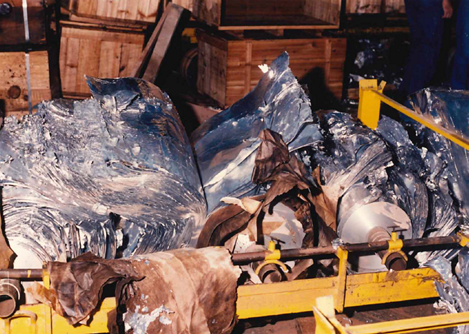
The explosion emits a dry noise (bang), throws aluminium foil a distance away and can even deform the coil’s spool. The event is marked by a single loud bang, without any burning or visible light emission (flash). Typically, the explosion propagates from the centre of the coil outward. An explosion caused by hydrogen oxidation can generally be ruled out if there is no presence of a spark or flame.
Also read: From Turkey to China: Which companies are leading global aluminium foil production?
Coils with widths greater than 450 mm are more prone to this phenomenon due to the difficulty in releasing gases generated during the process. Additionally, the flatness of the material contributes to gas retention. A flatter foil increases the likelihood of gas being trapped within the coil.
Aluminium foil coils must not be exposed to environments with excessive moisture, such as flooded areas. If a coil becomes submerged, it is recommended to isolate the material in a dry, well-ventilated area for at least 48 hours.
When insulating coils, priority should be given to the thinnest and widest ones, as these present the greatest risk. Wet coils stored in wooden packaging should also be isolated, since the force of an explosion can break the packaging.
Recommendations
It is essential to maintain a safe distance from coils that emit noise or release water vapour, as these are signs of a possible explosion. If a rise in coil temperature is observed, actively cool the coil using a fan and isolate the surrounding area for a minimum of 48 hours. Whenever feasible, cut the coils to eliminate the possibility of trapping pressurised gases.








The explanation of how water vapour gets trapped in thin foil is fascinating. I hadn’t considered how the minimal spacing between wraps could make such a difference. This really emphasizes how crucial it is to monitor the thickness and handling of foil in certain applications.
This is the type of information that is not available in the literature, as it is based on life experience.
Aluminum is a metal with great potential, but it is poorly studied, and only those who work with it know the details of its production, handling, and storage.