

Aluminium is steadily redefining how mobility, design and durability come together in modern transport solutions. From automotive lightweighting to premium recreational vehicles, the metal’s strength-to-weight advantage is unlocking new possibilities. In Arizona, a new generation of aluminium-backed camper vans, Alumivan, is showing how luxury travel and structural performance can coexist, without compromise.
Why is aluminium replacing wood and composites in camper interiors?
Most campervans today rely heavily on wood and composite materials for interiors and structure. While familiar, these materials bring issues like excess weight, susceptibility to moisture and noise from creaking under stress. Alumivan’s approach flips that narrative by centring aluminium as a core construction element. Its use isn’t cosmetic; it’s structural, functional and performance-driven.
Aluminium brings several advantages over traditional materials, starting with lightweight strength. A lighter body improves fuel efficiency and handling. Its corrosion resistance ensures longevity against the elements. Its thermal stability and rigidity avoid the warping and noise typical of wood-based interiors. In simple terms, travellers get a solid, quiet ride with a premium feel, a crucial edge for vanlifers who value both comfort and durability.
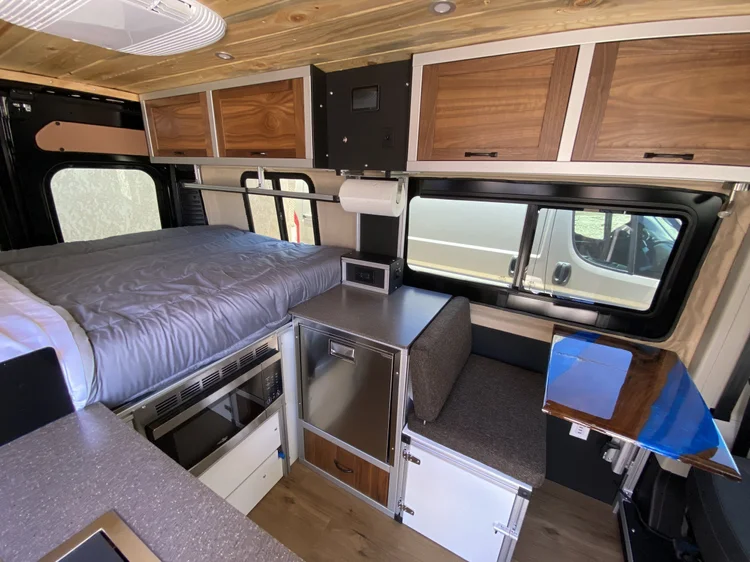
Image credit: alumivan
Designing open, durable and noise-free living spaces
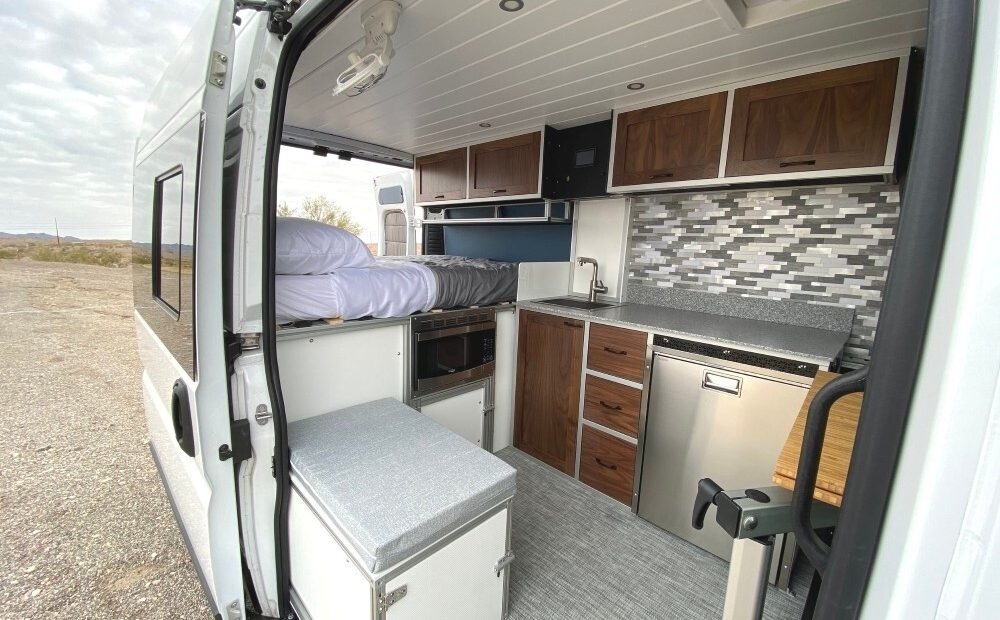
The Reverie camper vans are far from minimalist. Their interiors are open, bright and intelligently laid out. Instead of rigid cabin partitions, there’s an open flow from driver to living area, making spaces feel larger and more integrated. Cabinets and storage units leverage extruded aluminium framing, blending utility with modern aesthetics.
Practical features include:
- A kitchen right behind the driver’s seat for easy access
- A 25-gallon freshwater tank with a Bosch electric water heater
- An outdoor shower setup for convenience on the move
- A floor-to-ceiling storage unit ideal for clothes and gear
- A comfortable sleeping area that doesn’t compromise space or accessibility
These design choices aren’t just style statements. They reflect aluminium’s versatility, smartly incorporated to keep weight down while enhancing utility and comfort.
Powering life on the road
Modern campervans must travel off-grid confidently. Alumivan’s electrical layout backs this philosophy. It features a 460 Ah lithium battery bank, a 3,000 W inverter and a 50-amp DC-DC charger. Solar input comes from 400 W solar panels, whose aluminium frames not only help protect the panels but also align with the brand’s lightweight ethos. This power system supports appliances and electronics reliably, something any long-haul traveller will appreciate.
What does it cost and where could this trend go?
So what’s the price of bringing this aluminium-rich mobile lifestyle to life? The Reverie 136″ starts at around USD 46,000 and the larger Reverie 159″ at about USD 51,000. Because these are custom-oriented builds, final pricing can vary based on specifications and add-ons.
Aluminium’s adoption here is more than a design choice. It signals a broader shift where mobility, lightweight engineering and premium experience intersect, especially for sectors where durability and comfort matter equally. From electrification to camper culture, aluminium’s role continues to deepen.
Source: Where luxury meets strength: Arizona-based company launches aluminium-backed camper vans