

Introduction
Aluminium is a light, malleable metal with excellent heat conduction capacity, characteristics that make it ideal for kitchen utensils, especially for those looking for practicality in daily use. Its high thermal conductivity, low cost, lightness, recyclability, mechanical and corrosion resistance, as well as ease of cleaning and long durability, make it an extremely attractive material for the household utensils sector.
The production of these utensils can occur through different processes, such as stamping or casting. In the specific case of pressure cookers, manufacturing is carried out by deep drawing using a die and punch, a relatively simple process. However, strict control of process variables is essential to guarantee the final quality of the product and its performance in use. Critical factors include: Blank holder pressure, tool clearance, tool alignment, lubricant viscosity, lubricant quantity applied and aluminium alloy.
A manufacturing issue begins to surface
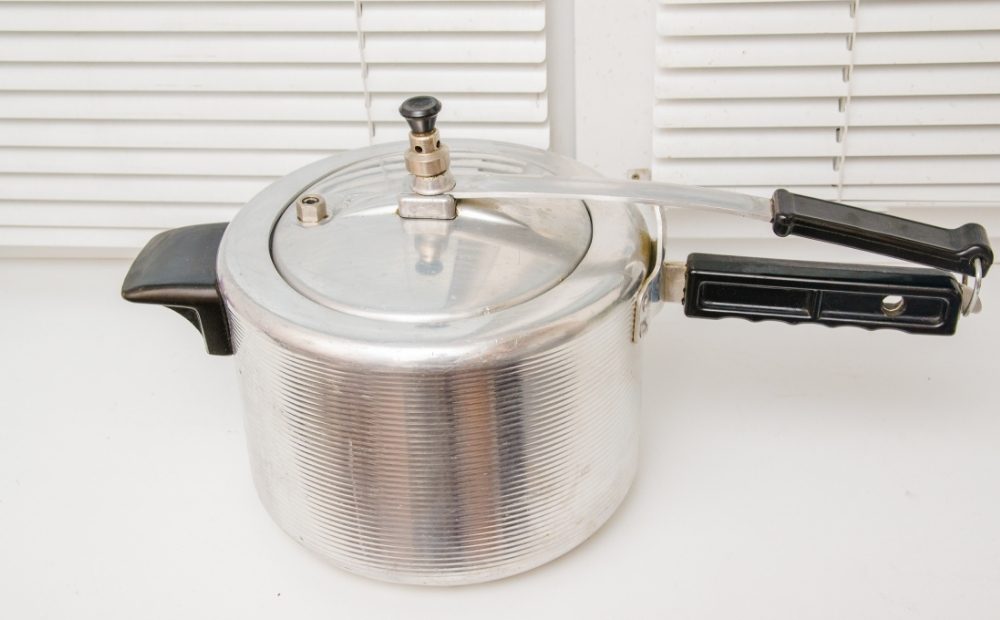
A household utensils manufacturer uses an Al-Mn alloy in the production of pressure cookers, achieving high levels of efficiency, productivity and quality. At a certain point, however, the customer began to report a failure in the upper region of the product shortly after the first stamping stage, characterised as a “Broken Surface”.
We visited the customer to investigate the root cause of the complaint. During the follow-up process, we identified the use of a high-viscosity lubricant with added zinc stearate to increase lubricity. We observed other critical points: Variation in the amount of zinc stearate added by each operator and inconsistency in the amount of lubricant applied to the surface of the aluminium disc. The problem was more common in batches with thicknesses at the upper limit of the specification. Furthermore, it was found that the annealing was performed using two different routes, one using an inert atmosphere and the other not.
Examining the “Broken Surface” defect in detail
The surface defect known as “Broken Surface” had been requiring frequent operational interventions on the pressure cooker production line. The defect appeared in the upper region of the pan, right after the first forming stage, approximately 170 mm from the bottom, in random positions relative to the circumference.
SEM/EDS analysis revealed the presence of cracks on the aluminium surface, with varying depths. However, optical microscopy evaluation did not identify internal discontinuities, such as inclusions, mechanical damage or incrustations that could be related to the origin of the defect. Although the company manufactures various household utensils, the problem was observed exclusively in the pressure cooker line.
The defect presented three levels of criticality:
A – Very surface
B – Moderate
C – Severe
To reduce the impact on production, the client established the following approval criteria:
A – Approved
B – Approved with restrictions
C – Rejected
Figure 1: The lines represented the defects on pressure cooker
Testing the variables: A doe-driven investigation
To identify the root cause of the problem, a multidisciplinary group was formed, composed of representatives from the aluminium supplier and the client. From the supplier’s side, process engineers from the cold rolling and the finishing line participated, as well as a Black Belt engineer. From the client’s side, the team included process, quality and production engineers.
Based on the Six Sigma methodology, the development and execution of a Design of Experiments (DOE) was defined, a tool that allows for the systematic evaluation of the effects of the variables involved and their interactions.
The DOE was developed with 2 levels and 3 factors, totalling 8 tests.
| Factors | Levels | |
| Lubricant | Higher viscosity | Lower viscosity |
| Thickness | Low | High |
| Annealing | With an inert atmosphere | No atmosphere Inert |
The higher viscosity lubricant corresponds to the product currently used, already additivities with a standard amount of zinc stearate. The lower viscosity lubricant, in turn, is a commercially available alternative for this application.
The variable “thickness” was adopted as a reference to evaluate the tool clearance output (low thickness indicating greater tool clearance output; high thickness indicating less tool clearance output). It is important to highlight that no adjustments were made to the tool set during the tests.
After the experimental steps were completed, the pans were evaluated by the group members according to the previously established criteria.
Key findings from the stamping trials
To achieve criterion A, the combination of thinner thickness and lower viscosity lubricant showed the best product performance.
After the study was completed, the tool set was removed from the press to make the necessary adjustments, and under these new conditions, the process resumed its standards of excellence.
No correlation was observed with the annealing furnace atmosphere.
Conclusion
When a high-viscosity lubricant is used with low tool clearance, a flow restriction occurs between the metal and the tooling. During stamping, this condition increases the pressure on the aluminium surface, increasing the likelihood of defects.
Also read: Aluminium in women’s accessories: Sustainability, comfort and innovation