
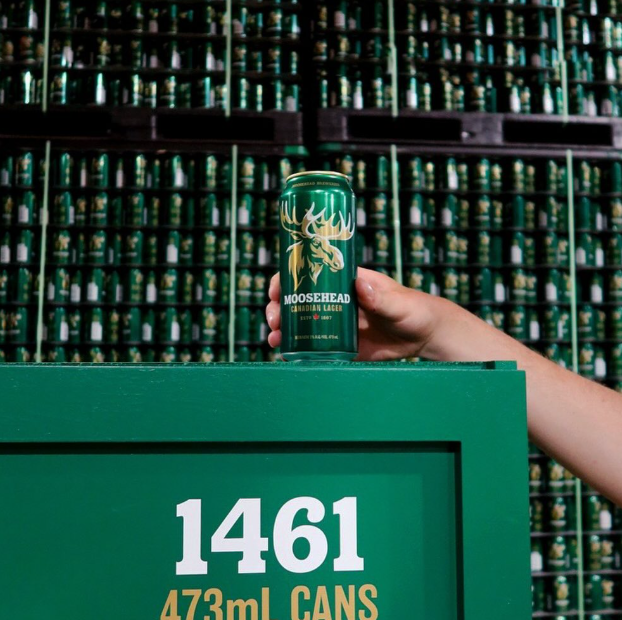

Some transitions signal more than a packaging change; they mark the end of an era and the start of a new industry narrative. That is exactly what Moosehead Breweries is doing as it moves away from its iconic glass bottles and fully embraces aluminium cans and kegs.
From iconic glass bottles to aluminium packaging
For generations, Moosehead’s green glass bottle was more than packaging; it was a symbol of Canadian beer heritage. However, consumer behaviour has shifted decisively. Aluminium cans now dominate domestic beer sales, accounting for roughly 85% of the market, while glass bottles have declined to about 15%.

Image credit: moosehead
Reflecting these broader packaging and consumption trends, the brewery plans to transition its entire product portfolio to aluminium formats by early 2026, signalling a long-term commitment to cans and kegs.
A farewell rooted in brand heritage
This transition is not without emotion. The green bottle carries strong symbolic value and Moosehead is acknowledging that legacy through a farewell campaign. Consumers are being offered the opportunity to claim the final glass bottle ever produced and witness its journey off the production line, closing a historic chapter in Canadian brewing.
Why aluminium is winning in beer packaging
Performance and product protection
Aluminium cans provide superior protection against light and oxygen, two major contributors to beer spoilage. By limiting exposure, aluminium packaging helps preserve flavour, freshness and shelf stability, particularly important for modern distribution networks.
Efficiency and sustainability advantages
Compared with glass, aluminium packaging uses less material and requires lower energy inputs for transportation due to its lightweight nature. These advantages translate into logistical efficiency and potentially lower lifecycle emissions, making aluminium the preferred choice for many beverage producers.
Cost pressures and supply chain realities
The shift to aluminium is not driven by performance alone. Beer Canada has highlighted rising aluminium costs and tariff-related pressures that are reshaping the economics of beverage packaging. Cross-border processing inefficiencies play a role, as Canada exports primary aluminium for conversion into can sheet overseas.
Tariffs applied to both raw aluminium and finished can components are increasing costs at multiple points in the supply chain, impacting brewers and consumers alike.
What this shift means for the beverage industry
Moosehead’s move reflects a broader industry trajectory. Lightweight, sustainable and aluminium-centric packaging is no longer a niche preference. It is fast becoming the default standard for beer and beverage producers navigating changing consumer expectations, cost pressures and sustainability priorities.
Source: Moosehead bids adieu to glass and welcomes aluminium