

Introduction
Over the past year, the questions I hear from aluminium businesses have started to converge.
Should we add anodising?
Is solar framing still worth expanding?
Where do we invest for the next decade?
What comes after basic extrusion, now that price pressure feels permanent?
These are not abstract questions. They come from people running plants under tight cash flow, rising power costs, tougher buyer terms, stretched receivables and bank scrutiny, while still needing to commit to equipment that sits on the balance sheet for years.
The investment dilemma facing aluminium producers
A plant owner recently asked for a simple answer: Should he add anodising and coating to supply solar frames, yes or no? The question matters because investment cycles are long, but demand patterns are shifting fast. If you build for yesterday’s market, you can end up paying for it through 2026–2030.
So, the practical issue is this: By 2030, which industries will still buy serious aluminium volumes and what will they require beyond the metal?
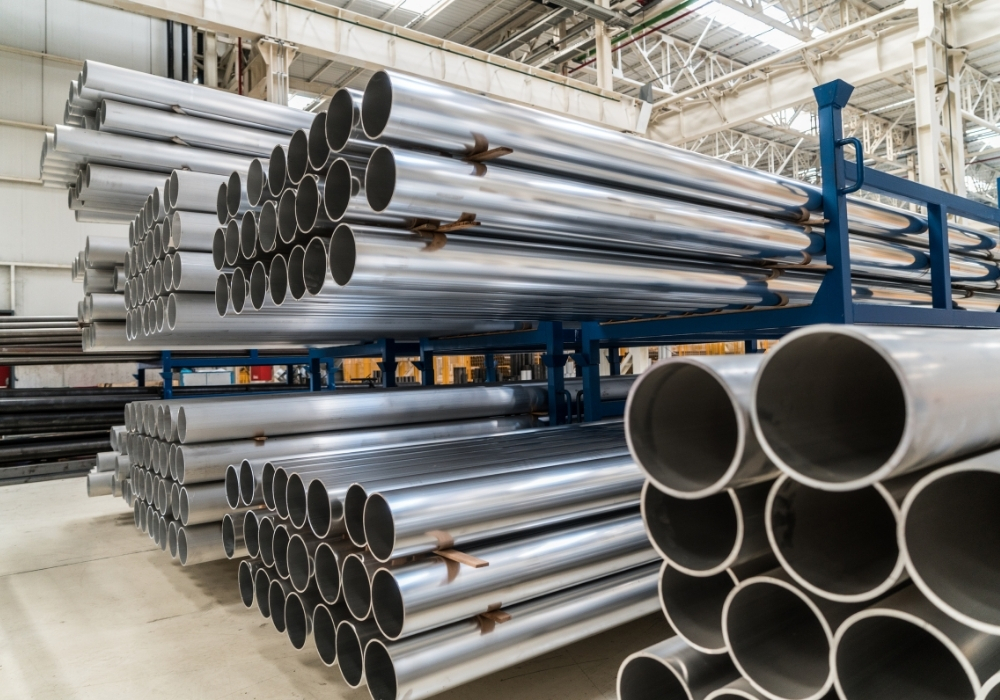
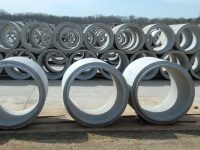
Image used for representational purpose
When capacity becomes a commodity
Basic extrusion has become a crowded, price-led game in many lines. Too many suppliers. Too many near-identical quotes. Too little differentiation. You can see it in the segments everyone knows: Standard architectural profiles, common façade sections, commodity solar frames, general industrial sections and simple heatsinks. These categories still matter. But when the buyer’s comparison collapses into one metric, the price per kg, the outcome is predictable.
Margins compress.
Terms stretch.
Schedules shift.
And loyalty lasts only until the next quote.
Why the old model is breaking
This model becomes fragile when power costs rise, alloy prices move, receivables extend, or new capacity enters the same lane. That is why more owners are asking a better question: Do we keep adding capacity, or do we build capability? Because from 2026 to 2030, growth is more likely to come from capability.
Capability vs Capacity
Crowded markets compare suppliers by kilograms. Capability-led markets compare suppliers by performance. In capability-led demand, the buyer is not primarily asking “how cheap.” They’re asking “how dependable.”
Can you hold tolerance batch after batch?
Can you provide traceable QA and corrosion results?
Can you supply finished parts, not only profiles?
Can you repeat the same outcome for months without surprises?
Same aluminium. Different business.
Where demand is actually moving
Several growth sectors treat aluminium as a technical enabler, not a commodity input. They buy reliability, repeatability, documentation and traceability along with volume. The sectors most likely to drive higher-demand, higher-spec requirements through 2030 include AI compute and data centres, grid build-out and storage, EV and mobility platforms, hydrogen systems, defence and aerospace and high-performance industrial equipment.
The real investment question
Which brings the investment question back to where it belongs.
If the default answer is “add another press,” pause. A sharper question is: Which capability will be an entry ticket to future buyers?
For many businesses, the capability stack is not exotic. It is discipline: Stable surface treatment, repeatable machining and fabrication accuracy, QA systems that survive audits, process control that does not depend on individuals and the ability to supply finished assemblies.
Solar framing can still be attractive. But the advantage comes when it is built with consistent finishing and strong process discipline. Done well, it becomes a platform for higher-value applications rather than a single product line.
What defines the next decade
Between 2026 and 2030, the industry is unlikely to be defined by who added the most capacity. It will be defined by who built the most dependable capability.
Next month, I’ll look at AI and data centres, not the hype, but the demand pattern.