
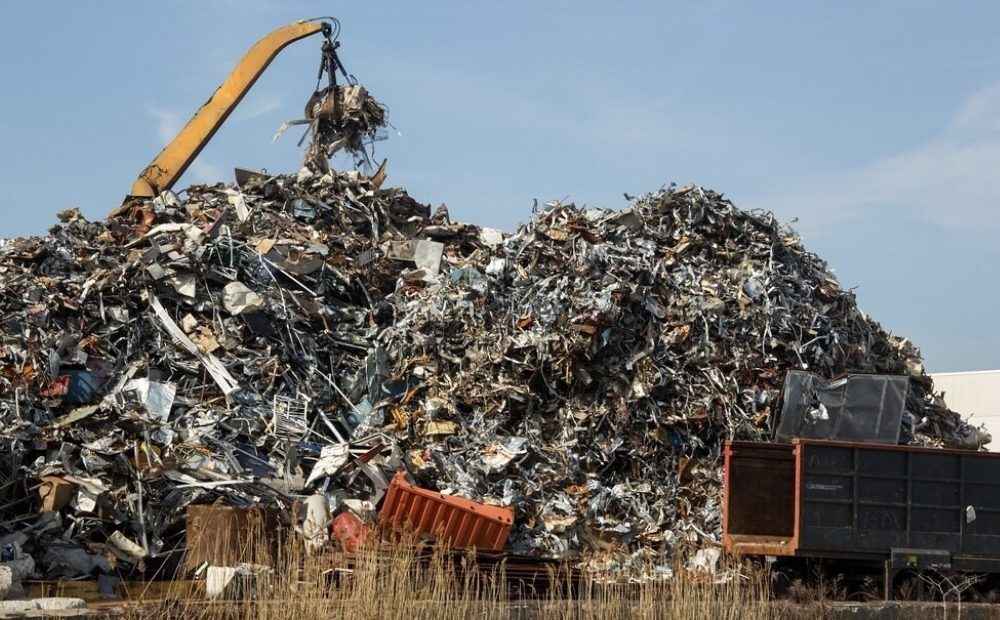

As the world changes, technology transforms!

Image 1: Thorstein Veblen1, American economist and social scientist who sought to apply an evolutionary, dynamic approach to the study of economic institutions
Veblen briefly defines technology as the “employment of scientific knowledge for useful ends”.
The most important Earth’s natural resources2:
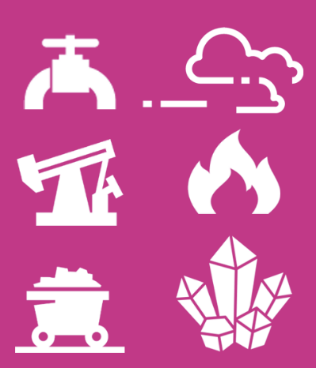
Image 2: Six Earth’s natural resources
- Water
- Air
- Oil
- Natural gas
- Coal
- Mineral
None of these resources is renewable. Consuming these limited resources threatens both our industrial existence and, through the emissions generated during these processes, our natural environment. The solution, however, is simple: the seventh resource recycling.

Image 3: Glenn T. Seaborg, who shared the 1951 Nobel Prize for Chemistry for his discoveries of transuranium elements3
The present materials situation is literally reversed; all waste and scrap, which are now called secondary metals, become our major resources and our natural untapped resources become our back-up supplies4.
To distinguish between traditional and modern technological paradigms, it is essential to first break technology down into its components: manufactured objects and tacit knowledge. In professional discourse, “manufactured objects” refer to manufactured objects or “artefacts,” ranging from stone or wooden tools to modern microprocessors. In contrast, tacit knowledge, often referred to as “technical,” represents the unmanifested knowledge base encompassing the knowledge and skills required to design, produce and use these objects.
Also read: Aluminium recycling is more than recycling
Traditional technology is characterised by a high degree of “tacit” knowledge, where the tool and the craftsman are inextricably linked, while modern technology is defined by its “systemic nature,” where an individual artefact cannot function outside of its broader infrastructure. When we reconstruct this technological paradigm through modern metallurgical process technologies, we encounter a different picture. On the other hand, modern metallurgical processes have a different systematic nature. Because:
- Process costs must now be calculated not only as economic costs, but also considering environmental impacts and workers’ health and safety.
- Taking into account the decreasing and declining ore quality and grade, we must develop new and more sustainable extraction technologies.
- We need to use more scrap and process by-products as raw materials within the total metallurgical production.
- In the context of a circular economy, we must also utilise or, at least, transform into harmless waste forms the by-products and waste generated during metallurgical processes.
In contrast to primary aluminium production, which requires bauxite as its raw material, secondary operations depend on sufficient quantities of suitable scrap.
The amount of dross and slag generated during the metallurgical process of Secondary Aluminium Production depends on:
- The type of scrap results in different amounts of oxides and contaminants!
- The type of furnace in use!
- The metallurgical process management itself!
There are several ways to minimise the formation of these waste streams during the process and in addition, there are some processes known to recover the metallic aluminium content of dross or salt slag in-house.
The main problems of aluminium recycling
Scrap-related
- Variations of old scrap
- Complexity of compositions and contaminants in the various types of aluminium scraps. The scrap quality also limits the quality and composition of the final alloy.
Technology-related
- Metal losses due to dross generation
- Less energy consumption
- Secondary metal quality: Difficulties in controlling the level of impurities, as well as difficulty in obtaining the targeted alloy composition. Both wrought and casting alloys can be obtained by recycling, but they strongly differ. Casting alloys have higher alloying content than wrought ones. While the formers have a concentration of elements up to 20 wt %, the wrought alloys have up to 10 wt %.
- Understanding the behaviour of different scraps during melting is crucial in the recycling process.
- To avoid downcycling instead of recycling. The feature of aluminium to absorb foreign and undesired/segregated elements, which are not normally described in the international standards. To remove impure elements from a molten bath is impractical or inconvenient. In this case, two possible solutions are currently followed: “downgrading and dilution”. By downgrading, lower value products are produced from high-quality scrap, while by dilution, the molten scrap is diluted with primary aluminium or high-purity/expensive scrap to reduce the concentration of elements below target chemical composition levels.
- Processing of aluminium dross/salt cake to produce valuable materials.
Environment-related
- Minimisation of carbon emissions (related to Scope 1 and 2)
- Minimisation of losses to oxidation dross/salt cake (solid residue).
Economy-related
- The key factor is“molten metal cost”!
- Look for high premium products from scrap (upcycling)
- Cost of carbon emissions
- Trade wars
- EU and USA secondary aluminium demand is growing.
Engineering-related
- Minimise conversion cost
- Maximise alloying elements recovery
- Look for high premium products in a certain percentage of total production
- Focus on green production
- To process low-grade scrap with high contaminations
- Try to minimise and/or utilise waste.
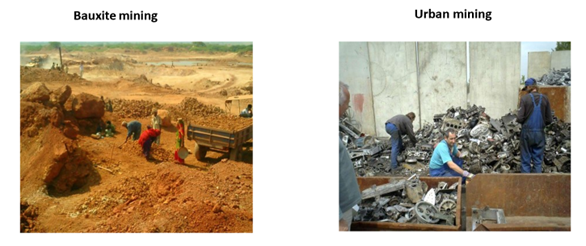
Image 4: Bauxite mining and urban mining
Conclusion
Recycling is a critical component of the aluminium industry based on its favourable economic impact on production and its contribution to the environment.
In this context, compared to other metallurgical processes, the “recycling” process requires more “tacit knowledge”. When we talk about aluminium recycling, we are talking about more than 450 alloys, more than 50 defined scrap types and scrap from a metallic material used in almost every sector.
To control recycling processes, we have to minimise “conversion cost” from scrap to product by;
- Understand the technology,
- Manage the technology
- After all, “control of process” using digital tools!!!
Using Veblen’s definition, AI and automation are not simply machines or software, but part of the current state of the industrial arts.
References
- Veblen’s photo: (Photo: https://geniuses.club/genius/thorstein-bunde-veblen#google_vignette)
- Recycling: The Seventh Resource Manifesto, Global Recycling Day, 18 March 2018, Bureau of International Recycling
- Seaborg’s photo: (Photo: https://www.britannica.com/biography/Glenn-T-Seaborg)
- Aluminium, the Magic Metal, Thomas Y. Canby, Natural Geographic, August 1978